
MacGregor unveils new LCO2 transfer system
MacGregor has developed a new Liquid Carbon Dioxide Bow Transfer System designed to enable safe and reliable ship-to-well and ship-to-rig transfer across a wide range of operating conditions.
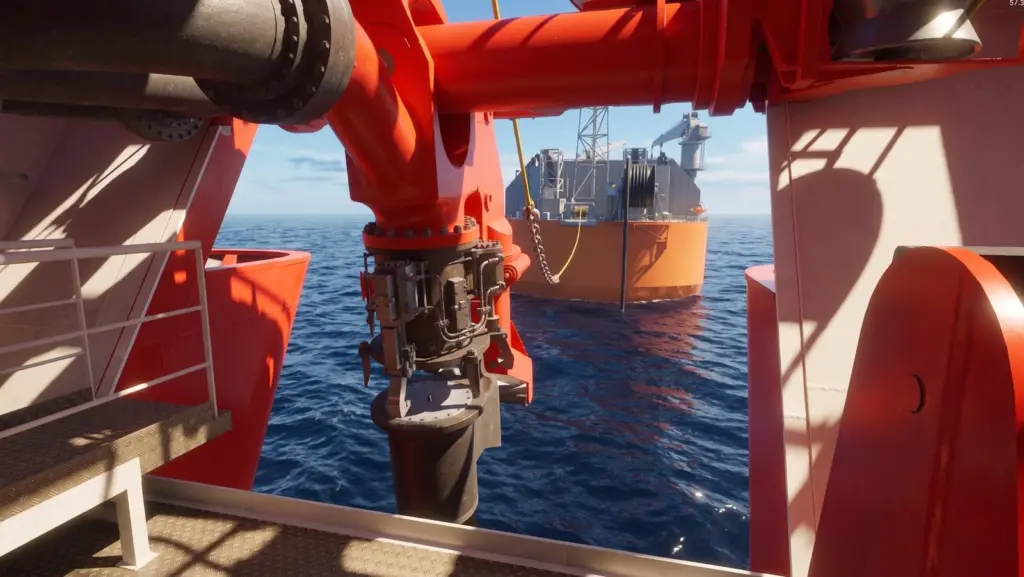
The system is intended to connect carbon capture plants directly with offshore injection units, potentially eliminating costly intermediate onshore storage and conditioning facilities required under current approaches. The development builds on MacGregor’s Bow Loading System, a technology used reliably in the oil and gas industry since the 1970s.
“Our robust new design solves the challenges of securing reliable and safe connection, transfer, and disconnection in all seasons, even in severe weather, without delays or interruptions,” said Øyvind Solli, development programs manager at MacGregor.
About 79% of the new system is based on field-proven technology, while the remaining components have been modified or newly engineered to address the properties of LCO2. The company has tested sealing materials with research organisation SINTEF under rapid gas decompression and LCO2 conditions.
Testing demonstrated material integrity through repeated pressure cycles and temperatures as low as -57°C, the threshold below which carbon dioxide can no longer remain in a liquid state. The system is designed to operate in heavy seas with wave heights of five to six metres and prevent water ingress at depths of up to 150 metres.
MacGregor said the hardware can form the basis of four system architectures, covering low- and medium-pressure operations of 30-60 bar and high-pressure injection at 300 bar. Configurations can incorporate seabed swivels or disconnectable turrets, allowing operators to adapt the technology to individual offshore field requirements.
The company joined the EU-funded COREu research and innovation consortium in early 2025 and is undergoing technology qualification with DNV. Planning for qualification has been completed, including risk and technology assessments, with prototype testing and demonstration expected in mid-2027.
Solli said the qualification process had identified equipment and application risks, with MacGregor and DNV establishing a framework to manage and mitigate them ahead of final verification.
Related Articles
 EQUIPMENT
 ALTERNATIVE FUELS & LUBRICANTS
 EQUIPMENT