




CMT launches cylinder leak tester
CM Technologies (CMT) has launched a new pressure drop test instrument (PDTI), providing ship operators with a simple method of detecting cylinder pressure leaks before they lead to higher fuel consumption, expensive repairs and unplanned vessel downtime.
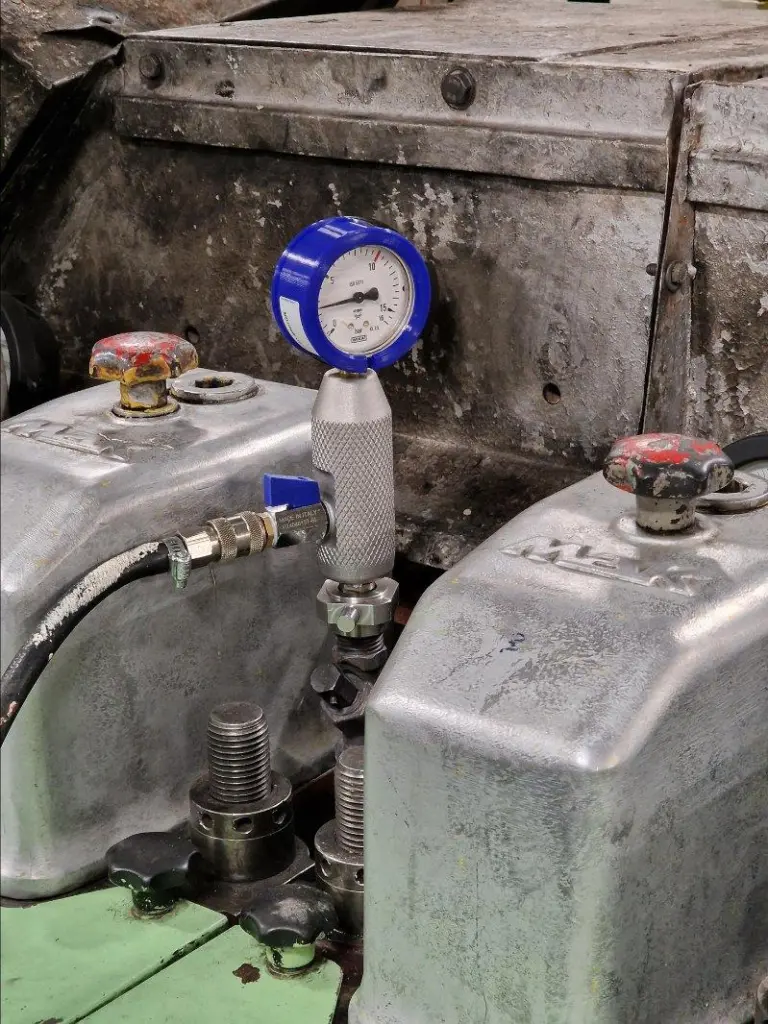
The compact instrument has been developed to identify early signs of engine deterioration by measuring pressure losses within diesel engine cylinders during routine maintenance.
According to the company, the test can reveal issues such as worn piston rings, damaged cylinder liners and leaking inlet or exhaust valves before they develop into more serious failures.
“Any loss of cylinder pressure also represents a loss of energy that would otherwise act on the piston during combustion,” said CMT managing director David Fuhlbrügge.
“As a result, an engine will require more fuel to compensate for the reduced pressure and maintain the required power output.”
The PDTI introduces compressed air into the combustion chamber through the engine indicator valve. Once the required pressure is reached, the system is sealed and monitored over a defined period, allowing engineers to measure pressure decay.
By comparing results across individual cylinders, crews can quickly identify those losing pressure more rapidly than others, highlighting components that may require further inspection.
The company says acceptable pressure loss varies between engine types, but comparing cylinders provides a practical benchmark for identifying abnormalities.
“If pressure is escaping from the combustion chamber, energy is being lost,” Fuhlbrügge explained.
“That can contribute to higher fuel consumption because additional fuel may be required to compensate for the loss. Pressure drop testing can also indicate common problems such as piston-ring deterioration or problems with the exhaust vale.”
CMT has manufactured the PDTI using additive manufacturing, with stainless-steel powder built layer by layer through a specialised 3D-printing process. The approach enables complex internal air passages while maintaining the instrument’s structural strength and compact design.
“Pressure leakage is easy to overlook, but it can be an early indication that the engine is beginning to deteriorate,” said Fuhlbrügge.
“A simple comparison of pressure decay between cylinders will help save fuel and give engineers useful information before it becomes a costly problem.”
Related Articles
 EQUIPMENT
 EQUIPMENT
 EQUIPMENT