



Lloyd?s Register adopts a listening approach
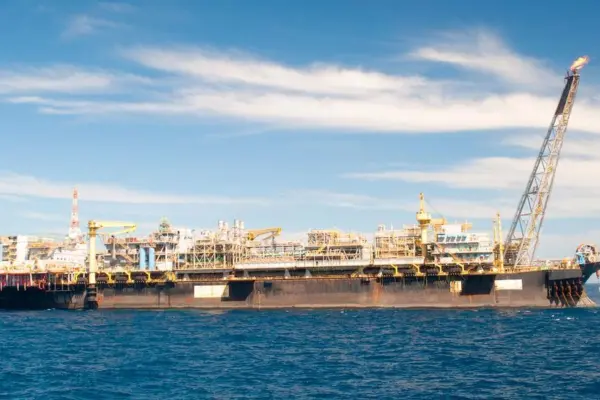
It is strange how the funding for technological advances is acquired and how long it can take for some technologies to be accepted. A case in point is BALRUE, a new generation acoustic emission monitoring system developed jointly by Lloyd?s Register, Airbus (a BAE Systems and EADS joint company) and Ultra Electronics Ltd. Launched at the ShipRepair & Conversion exhibition in London in November, the system is designed for locating and determining the level of activity associated with fatigue cracks, not only in ship structures but also for those in many other industries. Perhaps one of the reasons that the technology was slow to develop is that it had to reach a level of maturity where it can be used reliably for structural assessment and monitoring purposes, particularly in the context of propagating fatigue cracks. Dr Len Rogers, senior engineer with Lloyd?s Register?s technical investigation department, tells The Motor Ship that development of the technology was started by the oil industry but stopped after the oil price collapsed. It was then taken up by the aircraft industry for detecting cracks in aircraft wings, and then, after further development, was again taken up by the oil industry for monitoring cracks in oil rigs. The technology has since been refined and now, in addition to these industries, is also being looked at to monitor floating production storage and offloading (FPSO)vessels. Oil companies can lose a considerable amount of revenue if an FPSO is taken off station for unscheduled work, so monitoring cracks and in particular, the propagation of fatigue cracks in structures is of considerable benefit, says Rogers. As Lloyd?s Register says; modern risk management techniques include structural assessment, testing, monitoring and inspection and when defects, such as cracks in metallic structures, are found, there is a need to assess their structural significance and consequent risks. The technology works in much the same way as the equipment used to monitor earthquake activity, explains Rogers. John Carlton who heads technical investigation work at Lloyd?s Register is fully supportive of the new crack monitoring system: “This particular development represents a significant advance in the portfolio of structural and machinery assessment methods, and will be of particular value in condition monitoring activities.” Lloyd?s Register says benefits of the system include: l Detection and monitoring of cracks with no prior location knowledge; l Provision of understanding necessary to enable continued operation, without repair, in certain circumstances, and provision of information to enable continued operation until an opportune and economic moment for repair, in other circumstances; l Scheduling mandatory repairs on a condition-based criterion, for certain structures. The standard BALRUE system comprises a 24 acoustic emission and 12 non-acoustic channel data acquisition unit, laptop PC and HCI (human command interface) software. Such a system would only be recommended if it showed a positive cost-benefit, which would emerge as part of the overall risk management process. Lloyd?s Register says that BALRUE systems have been deployed on major aerospace and oil and gas structures and that it envisages deployment on ships and other marine structures in the near future.
Related Articles
 OTHER NEWS
 INDUSTRY NEWS
 ALTERNATIVE FUELS & LUBRICANTS