

LNG emissions monitoring project launches
Four maritime partners will independently assess continuous CO2 monitoring accuracy on board a new LNG carrier from 2027
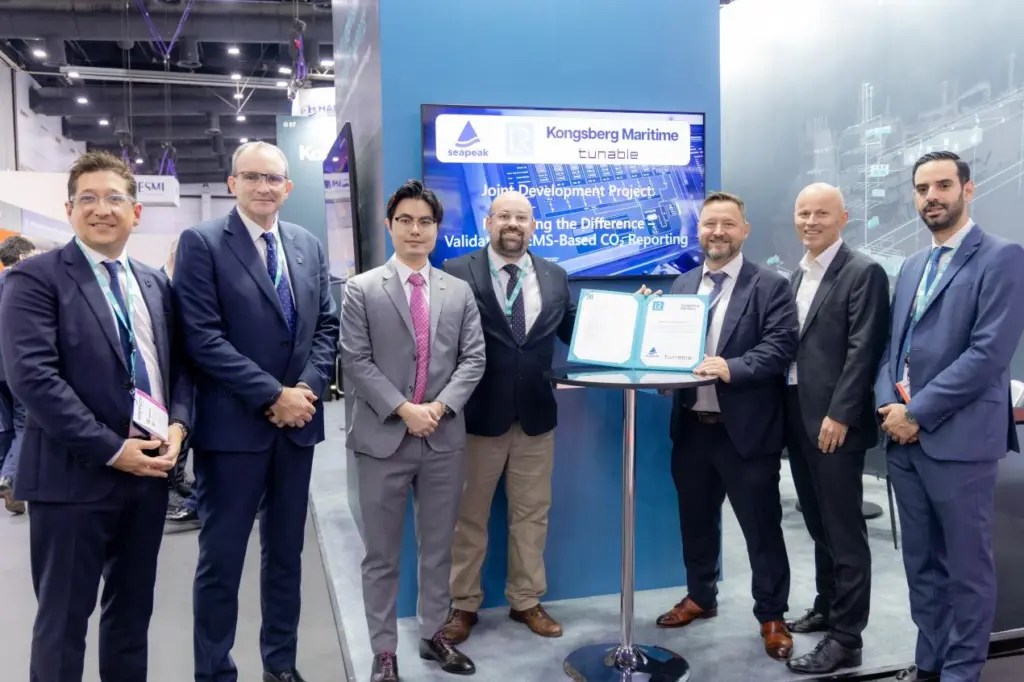
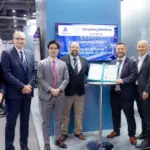
Lloyd’s Register (LR), Seapeak, Kongsberg Maritime (KM) and Tunable have launched a joint development project to independently verify continuous emissions monitoring aboard a new LNG carrier.
Announced at Gastech 2026 in Bangkok, the project will compare direct CO2 measurements from KM’s Continuous Emissions Monitoring System (CEMS), incorporating Tunable gas analysis technology, with engine test-bed data and standard emissions factors.
“The industry currently relies on default emissions factors and test bed data to estimate environmental performance,” said Panos Mitrou, senior vice president, Shipping Strategy at Lloyd’s Register.
“This initiative enables industry stakeholders the opportunity to compare estimated emissions performance against direct measurements from a vessel operating in real world conditions.”
LR will act as the independent verifier, assessing emissions data from a newly built LNG carrier scheduled for delivery in early 2027. Monitoring and analysis will continue throughout the year, allowing the partners to evaluate CEMS performance under real operating conditions.
The project will also examine how independently verified measurements could strengthen confidence in emissions data used by shipowners, charterers and regulators. The findings will assess the regulatory applicability of direct CO2 measurement under relevant IMO and EU emissions reporting frameworks.
James Cruickshank, director of Marine & Technical Services at Seapeak, said the project would support practical, data-driven approaches to environmental performance and operational efficiency. He added that real-world data could help identify opportunities to reduce greenhouse gas emissions across the company’s fleet.
Kongsberg Maritime sales director Eirik Agren said the initiative would compare established fuel-consumption calculations with direct CEMS measurements. “Integrating emissions measurements with fuel, engine and operational data allows the measurements to be corroborated and placed in context, strengthening confidence in the reported emissions,” he said.
Tunable business development manager Roar Hernes said continuous measurements could provide greater transparency. “Invisible gases contain valuable information,” he said, adding that the project would generate evidence supporting more data-driven emissions reporting.
Related Articles
 WIND PROPULSION
 BATTERY HYBRIDS & FULL-ELECTRIC VESSELS
 EQUIPMENT