




Guidance issued on fuel compatibility and stability
The guidance aims to provide a practical and working understanding of stability and compatibility of marine fuel oils, in what CIMAC expects to become accepted as the ’the common industry approach’ for stakeholders involved in the supply and/or use of marine fuel oil.
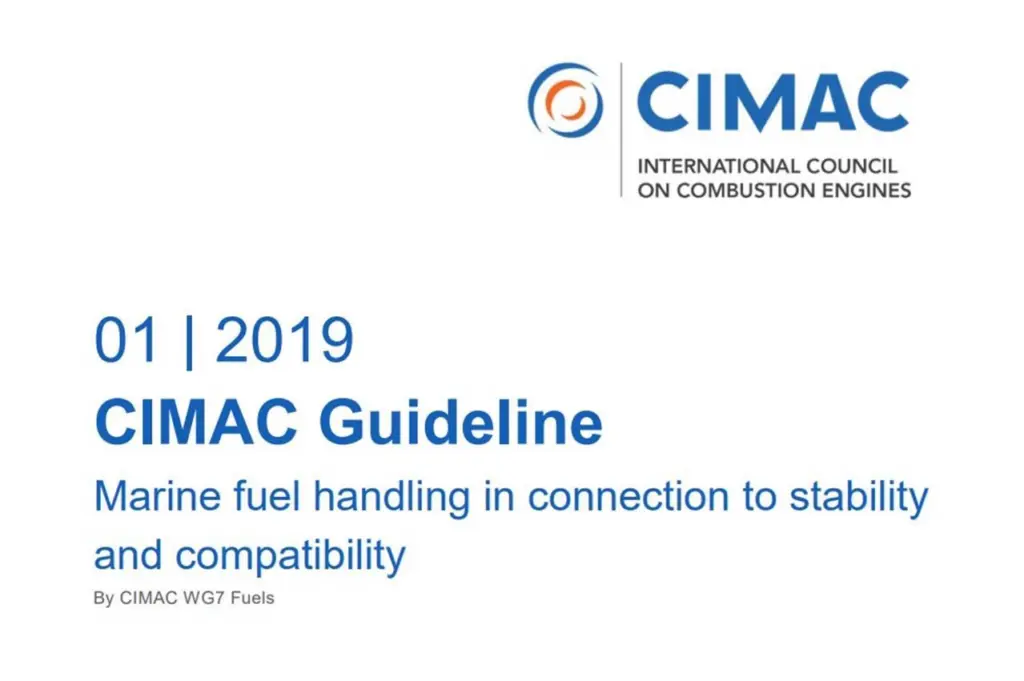
Fuels which are unstable, or incompatible when mixed, are both associated with sludge formation caused by precipitated asphaltenes. The CIMAC guide explains how these two specific fuel properties may be best managed in the supply chain and on-board ships to mitigate associated risk.
The guide includes details on the accepted available test methodologies for stability and for predicting compatibility are included, covering their applicability and correct interpretation.
The “CIMAC Guideline: Marine fuel handling in connection to stability and compatibility” is available here.
It compliments and expands on the information given in ISO/PAS 23263:2019 Considerations for fuel suppliers and users regarding marine fuel quality in view of the implementation of maximum 0.50% Sulphur in 2020.
The guide, along with the Joint Industry Guidance on the supply and use of 0.50% – sulphur marine fuel published in September, provides stakeholders across the marine fuels and shipping industries, from fuel blenders and suppliers to end users, with great tools to manage IMO 2020.
Related Articles
 FUELS & LUBRICANTS
 ALTERNATIVE FUELS & LUBRICANTS
 FUELS & LUBRICANTS