



Hybrid propulsion explored for large LNG carriers
Lloyd’s Register, Shell and GTT are assessing a 200,000m3 LNG carrier concept combining hybrid-electric propulsion and advanced cargo containment technology
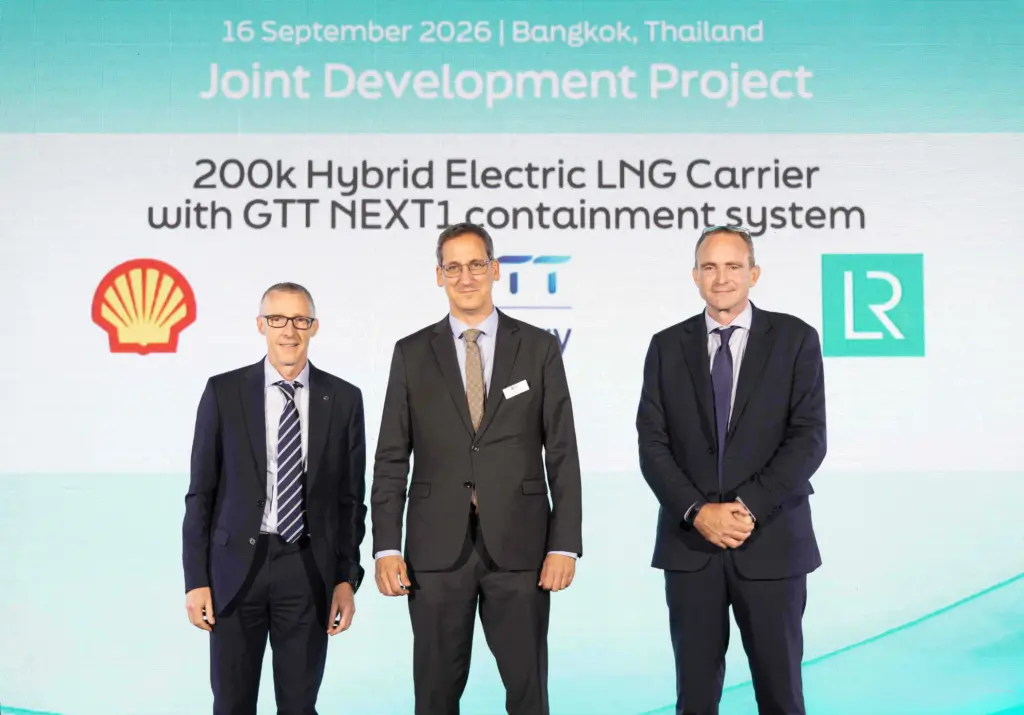
Lloyd’s Register, Shell and GTT have launched a joint development project to design and assess a conceptual 200,000m3 liquefied natural gas (LNG) carrier incorporating hybrid-electric propulsion and GTT’s NEXT1 cargo containment technology.
The project will examine how a larger-capacity vessel could increase cargo volumes, improve operational efficiency and provide greater flexibility as shipping requirements evolve.
“The industry is under increasing pressure to move more energy with lower emissions and greater operational flexibility,” said Constantinos Chaelis, global gas segment director at Lloyd’s Register.
He said the project would explore how hybrid-electric propulsion and cargo containment technology could support the technical and operational performance of larger LNG carriers, including an assessment of total cost of ownership (TCO).
Under the joint development project, the three partners will focus on developing and verifying the safety of the vessel’s hybrid-electric propulsion system. Areas of investigation will include system architecture, redundancy philosophy and battery integration.
The partners will also evaluate the integration of GTT NEXT1 cargo containment technology within the overall vessel design, examining how the different systems could work together in a larger LNG carrier.
A key element of the project will be a commercial assessment based on a TCO model, intended to help evaluate the potential economic implications of the proposed design alongside its technical performance.
The work will establish technical requirements and guidance for applying hybrid-electric propulsion to LNG carriers, contributing to industry understanding of the technology and its potential applications.
Chaelis said the collaboration would help establish the technical foundations for further evaluation of future LNG carrier concepts.
The project does not represent a commitment to build the proposed vessel, but will assess the feasibility and potential benefits of combining larger cargo capacity, hybrid-electric propulsion and advanced containment technology in a single design.
Related Articles
 ALTERNATIVE FUELS & LUBRICANTS
 BATTERY HYBRIDS & FULL-ELECTRIC VESSELS
 BATTERY HYBRIDS & FULL-ELECTRIC VESSELS