






DNV to consult on new VTI index in new Recommended Practice
DNV has announced that it will launch a Recommended Practice (RP) offering a new, accurate and transparent method for measuring, evaluating, and verifying the technical performance of ships in service. The RP is a direct response to the growing regulatory and commercial pressures within the shipping industry to decarbonise operations and establish a standardised, verifiable procedure for evaluating vessel efficiency.
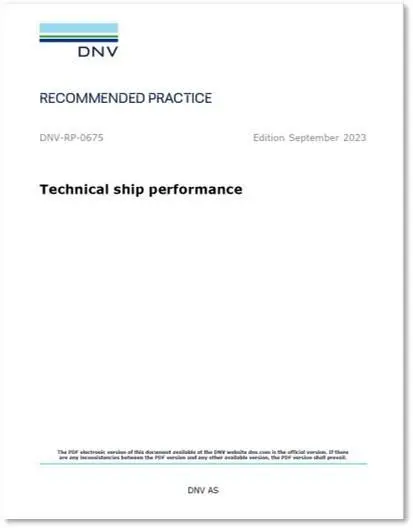
In the wake of the introduction of the Carbon Intensity Indicator (CII) vessels have been rated on their carbon emissions per unit of cargo-carrying capacity. However, the CII is impacted by external factors such as weather conditions, speed instructions, and loading condition, often overshadowing the true technical performance and efficiency of ships.
In its RP DNV proposes a Vessel Technical Index (VTI) as a complementary measure, showcasing a ship’s technical performance relative to its initial state, thereby eliminating the influence of external operational factors. In addition, the RP includes a novel approach to assessing the relevant sources of uncertainty, enabling the users to take informed decisions based on the VTI calculations.
“Regulations and other stakeholders such as cargo owners and financial institutions will increasingly put pressure on shipping to decarbonize. Reducing emissions and substantiating these efforts will become essential in a commercial setting where improved technical performance is likely to become a precondition for shipowners to gain access to capital and cargo,” said Trond Hodne, Business Director Maritime, DNV.
Hodne adds: “Our new RP primarily addresses what shipowners have direct influence over; the technical condition of their vessels.”
The following use is envisioned for the VTI:
1) A standardised way of working with performance data and creating a baseline
2) Facilitating dynamic- and performance-based charter party agreements
3) Assessing the optimal timing for hull and propeller cleaning and quantifying its impact
4) Evaluating and quantifying the effect of energy efficiency measures
With this RP DNV aims to provide an accurate and transparent standard which in combination with independent 3rd party verification will enable trust between stakeholders looking to utilise technical ship performance as a basis for sustainability-linked business.
The DNV RP will be put on hearing to the maritime industry 31st of May and is expected to be finalised and published in Q3 2023.
Related Articles
 ALTERNATIVE FUELS & LUBRICANTS
 ALTERNATIVE FUELS & LUBRICANTS
 REGULATION