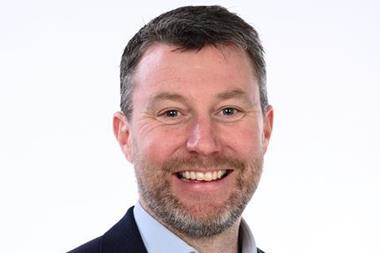
Flightship has completed the final phase of a lengthy three year classification process with Germanischer Lloyd for its futuristic wing in ground effect (WIG) craft. Flightship Australia managing director John Leslie says the classification of the eight seater FS8 has been extremely complex and required many negotiations of shipping standards for a craft that essentially features characteristics shared by both the marine and aviation industries. "There was a crossover of philosophies between marine culture and aviation culture," says Leslie. "The tough part of this was to get acknowledgment of the differences." Classification was completed at the end of November after several months of sea trials off Cairns, Australia. In providing an example of the challenge created by the craft?s hybrid of marine and aviation characteristics Leslie refers to FS8?s cable and pulley system - a universal feature in aircraft. "Marine people don?t really like these cable pulley systems because of fears that they will fail," says Leslie. "In the marine area reliability of a component or control system is based on maintenance whereas it is based on prevention in the aviation industry. "The aviation industry has a fantastic maintenance schedule and we had to persuade the surveyors that maintenance of the cable pulley systems will prevent failure." Leslie says the ground effect craft would have a higher maintenance schedule than other marine craft with a programme of 37 rotationally administered services. The shortest service for some components such as belts, drive systems and control systems was 20 hours, followed by 50 hours, 100 hours, monthly, quarterly and annually for other parts of the craft. "If an engine stops on an FS8 we are just two metres above the water so we still do not require the sort of under carriage maintenance that exists for aircraft," says Leslie. Leslie adds that discussions to form a joint venture with a San Diego based company would progress early in 2002 when representatives from San Diego travelled to Cairns. He is still unable to disclose the name of a buyer who will purchase four FS8 craft scheduled for delivery in October, November and December 2002 and January 2003. The WIG captain training course had been nationally accredited by Australia?s Maritime Safety Authority.
- News
- Subscribe
- Special Reports
Ammmonia
Methanol
BioFuel & Clean Diesel
Nuclear
LNG

Using an abundant, if toxic, resource to power the maritime fleet. A mature future fuel already in use - but will it become dominant? Numerous NGOs protested against the IMO earlier this year putting biofuels in its Global Fuel Standard, but the “fuel versus food” debate seems to have been solved by deriving fuels from waste. Technically the cleanest possible fuel source available to the maritime world and one that has the longest history, dating back to the 1950s. Why is it not in common, non-military use? LNG is currently the most popular lower carbon fuel, but with bio and e-LNG it could move beyond its current transition fuel status supported by extensive existing infrastructure. Read More Read More Read More Read More Read More
- Industry Database
- Events

Propulsion & Future Fuels Conference 2026
The Motorship’s Propulsion & Future Fuels is the leading international conference on powering shipping’s emissions-cutting ambitions.
The 2026 Conference will take place from 8th - 10th December in Hamburg, Germany and will offer a meeting place to learn, discuss and knowledge-share the latest developments in efficient power and propulsion technology plus alternative low flashpoint and low carbon fuels.
Click here for more information