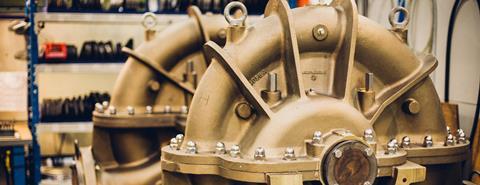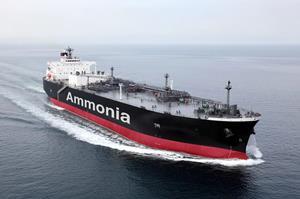


Modern marine installations place significantly higher demands on the materials used in pumps and ejectors.
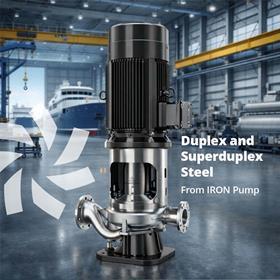
Aggressive media such as seawater, chlorides, alkaline scrubber liquids, and high temperatures challenge classical alloys more than ever, especially in closed systems where process water is recirculated and becomes increasingly concentrated.
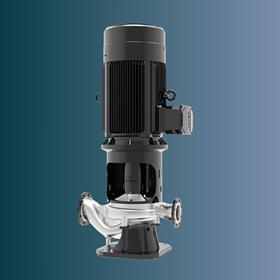
To meet these conditions, IRON Pump is increasingly introducing stainless duplex and superduplex steel into a range of components. These materials offer technical advantages in corrosion resistance, strength, lifespan, and weight optimization, without replacing bronze in applications where it remains the most optimal solution.
The transition strengthens the robustness of modern maritime systems and supports more efficient and sustainable operation.
1. Improved corrosion resistance in seawater and scrubber environments
Duplex and superduplex alloys provide significantly higher resistance to pitting, chlorideinduced corrosion, crevice corrosion, and erosion compared with copperbased alloys.
In scrubber systems, where process water becomes both alkaline/acidic and chemically stressed, duplex alloys maintain their passive layer far more effectively.
This results in stable and predictable performance in applications such as scrubber pumps, effluent ejectors, and installations with high flow velocities, where both chemical exposure and turbulence can be extremely challenging.
2. Lower CO₂ footprint over the material’s lifetime
The production of bronze and other copper alloys is energy intensive. Duplex and superduplex, however, can to a greater extent be produced using recycled raw materials and require less energy per kilogram.
Their extended lifetime in aggressive environments further reduces replacement needs, lowering material consumption and environmental impact across the entire lifecycle of the component.
3. Higher strength enables reduced weight
The high tensile strength of duplex and superduplex allows for reduced wall thickness while maintaining mechanical robustness.
This results in lighter components, easier handling, and the possibility of more compact constructions, without compromising operational reliability. The materials’ strength also improves resistance to erosion in turbulent flow conditions.
4. Longer service life and improved total cost of ownership
In media with high chloride levels, acidic process water, or turbulent conditions, duplex alloys maintain their passive layer significantly better than traditional bronzes.
This reduces corrosionrelated damage and extends service intervals, providing more stable operation and lower overall lifecycle costs.
5. Direct usability in aggressive media without coatings
Duplex and superduplex can be used directly in media such as seawater, alkaline scrubber liquids, and carboncapture streams without the need for additional coatings.
This eliminates potential failure points such as peeling or coating wear, resulting in simpler and more reliable designs.
The wetted parts, pump casing, impeller, and cover, retain strength and chemical stability even under large variations in chemistry and flow.
The introduction of duplex and superduplex contributes to more robust, corrosionresistant, and longlasting maritime installations, while bronze remains the technically optimal choice in applications where it continues to perform best.
This material selection balances proven experience with innovation and addresses the increasing demands placed on pump components by modern closed systems and aggressive media.
“Superduplex stainless steel enhances the robustness and service life of our pump systems in aggressive marine environments. It supports stable and efficient long-term operation.”
IRON Pump CEO Anders Frimodt-Møller