

The shipping industry faces a daunting challenge: how to decarbonise a sector that accounts for around 3% of global greenhouse gas emissions while keeping global trade moving efficiently. Unlike aviation or road transport, there is no single panacea. Instead, a patchwork of solutions—from methanol and ammonia to hydrogen derivatives, biofuels, and carbon capture—may well be needed to achieve net zero.
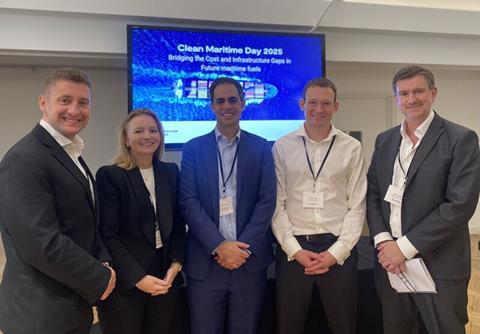
At a recent panel discussion held during London International Shipping Week, experts from government, industry, and technology providers, highlighted both the opportunities and hurdles ahead.
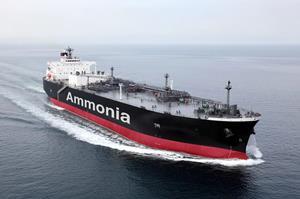
Pedro de Sousa Ascenso of Fortescue moderated the discussion and noted that shipping cannot wait until 2040 or 2050 to act. His company has already deployed dual-fuel ammonia vessels and is integrating ammonia into its supply chain. “We want to prove the technology works and scale from there,” he explained. For him, IMO’s adoption of a net-zero framework has been pivotal: “It creates a level playing field among shipowners and removes a big barrier.”
Ben Craig, head of maritime fuels at the UK Department for Transport, agreed that the IMO’s new strategy is a “game changer.” But he cautioned that regulations must be translated into workable detail. “Targets are important, but what matters is the guidelines and enforcement that follow. That’s what will give shipowners and fuel producers confidence to invest.”
Trade-offs when it comes fuel choice
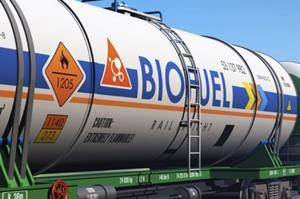
Each potential alternative fuel comes with trade-offs. Methanol is already making headway, with dozens of vessels in service but supply could be an issue. Ammonia shows promise but raises questions around safety and infrastructure. Biofuels provide a near-term bridge but face supply constraints. Hydrogen and its derivatives offer deep decarbonisation potential but remain costly.
Alex Green of MOL’s New Energy division pointed out that commoditisation is the key: “If we can get traders involved and develop real market demand, the infrastructure will follow. It’s about creating certainty for developers and shipowners alike.” MOL is already investing in flexible infrastructure, including concepts for floating storage units to overcome the cost and safety issues of onshore terminals.
Lee Beck of HIF Global emphasised the scale of investment required: “Building e-methanol at scale means hydrogen plants, CO₂ supply chains, pipelines, and bunkering facilities. Each project runs into the billions. To unlock financing, fuel producers need long-term offtake agreements—but shipowners are reluctant to commit when the regulatory and price outlook is uncertain.”
Cost issues
Cost parity with fossil fuels remains perhaps the greatest barrier. Charlie McKinlay of Lloyd’s Register’s Maritime Decarbonisation Hub underlined the importance of cargo owners: “The cost of shipping a T-shirt or a bottle of wine on green fuels is marginal compared to the retail price. Cargo owners can absorb some of that premium, but we need mechanisms that allow them to signal demand effectively.”
McKinlay pointed to initiatives like the Zero Emission Maritime Buyers Alliance, which pools cargo-owner demand to back long-term fuel offtake. Still, he warned, “theoretical demand signals are not enough—we need binding contracts if projects are to reach final investment decision.”
Craig added that innovative financing and policy support could help. “The challenge is to design self-activating mechanisms, like multipliers or revenue recycling, that reduce the risk for both fuel producers and shipowners.”
Infrastructure development is another challenge. Ammonia, for example, faces community resistance due to safety concerns. “A lot of communities don’t yet understand that ammonia can be managed safely,” Craig observed. But he stressed that political will can unlock rapid progress once the economic case is clear.
Green suggested that infrastructure will grow modularly: “You don’t start with a 30,000 m³ bunker barge—you start with 3,000 m³ and scale up. It’s about aggregating demand on specific trade lanes and then building from there.”
All panellists agreed that trust and certainty are vital. Beck warned that policy “flip-flopping” could leave fuel buyers or producers stranded. “We need clear, durable frameworks that are grandfathered over time so investments are protected for 20 or 30 years.”
McKinlay echoed the point: “The IMO must not only set ambition but also ensure integrity—minimising fraud and misrepresentation of fuels. That credibility is the backbone for investment.”
The panel made clear that shipping’s decarbonisation will not hinge on a single solution but on a combination of fuels, infrastructure, and policies. This is quite a task is, requiring hundreds of billions of dollars, new supply chains, and new ways of working between shipowners, cargo owners, governments, and fuel providers.
Yet there was optimism in the room. As Ascenso put it, “Shipowners don’t have the privilege of spot buying fuel anymore—we need to think upstream and downstream. But the momentum is real, and if we aggregate demand and create certainty, the transition can happen faster than people expect.”