

There seems to have been a recent surge of interest in nuclear power afloat. Most of this is coming from the major classification societies – all have recently published studies which confirm the viability of nuclear as an emission-free power source. And shipbuilders and designers are starting to come up with firm proposals.
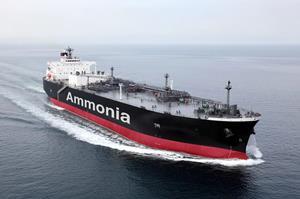
It is tempting to speculate on why this might be. After all, the focus has been on using future fuels like ammonia, methanol or hydrogen, with ‘bridging’ fuels like LNG and bio-diesel being promoted to fill the gap between realisation on the need to cut emissions – both quickly and significantly – and the alternative fuels becoming available.
It’s true to say that the green revolution has - temporarily we hope - stalled. Some of this feeling is no doubt down to the still-unanswered questions of when, and how, supplies of future fuels will be available in the quantities, and at affordable cost, to satisfy the considerable demands of the world’s shipping fleet alongside other hard-to-abate industries. And if we look at the ‘green’ versions of these fuels, produced using solely renewable energy, the goal looks even more ambitious. Then there are the concerns over safety and toxicity of these fuels that still have to be overcome.
Even the use of bridging fuels is not straightforward. LNG is stilled dogged by the spectre of methane slip – unburned methane being release into the atmosphere – though the engine designers and equipment manufacturers have succeeded in reducing the problem. Biodiesel, although an attractive option as a ‘drop-in’ fuel, depends on a supply of suitable feedstock.
And it seems that shipping emissions could be increasing rather than decreasing. Although moving raw materials and finished goods by ocean transport is undoubtedly the cleanest mode of transport, as production is ramped up worldwide then shipping movements increase, adding several percentage points to the oft-quoted figure that shipping produces around 3% of global emissions from moving well over 90% of goods.
The will is certainly there from many parts of the industry to cut shipping’s carbon emissions. But it’s not universal, as borne out most dramatically by the failure of the IMO MEPC’s recent extraordinary session to endorse the previously-agreed timescale for ‘net-zero’ implementation, with intervention from some member states having the effect of pushing things forward by at least 12 months.
IMO delay
Could this delaying tactic be a catalyst behind the current nuclear resurgence? It is mere speculation, but it could have a bearing on how the Net Zero Strategy develops. The IMO Member State leading the campaign to delay net zero, the US, does have a track record in nuclear ship propulsion, and may be less likely to regard the technology, particularly its latest developments, as a ‘green scam’. Much has changed in US government circles over the last decades, but we cannot forget that the US has been a driving force in nuclear power for many years. Not counting the icebreakers from the then Soviet Union, the US, with the vessel Savannah, has the distinction of building the first true commercial nuclear-powered ship.
The combined cargo and passenger-carrying Savannah, launched in 1959, was designed and built as a demonstration and prestige exercise with no requirement to be profitable. Although decommissioned in 1971 on cost grounds, it is thought that subsequent rises in the cost of oil would have meant Savannah’s running costs could have been on a par with conventional ships had she survived in operation.
Jumping forward to the present time, nuclear technology has developed to the extent that it is being regarded as a viable power source for merchant vessels. Rather than the pressurised water reactors of the pioneering vessels, effectively a scaled -down version of a land-based power station, a new generation of small modular reactors has emerged, and it is these which are at the heart of the latest proposals.
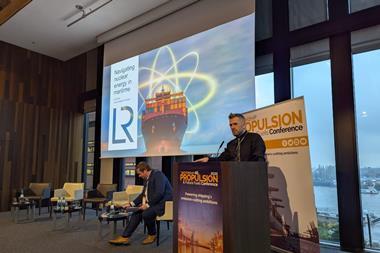
Lloyd’s Register (LR) is one of the main proponents in the current nuclear scene. Among other initiatives it has be working with Texas-based Deployable Energy to develop the latter’s Unity Nuclear Battery, a compact micro-reactor designed to deliver safe, zero-emission power. As well as virtually eliminating emissions, the technology offers the ability to extend time at sea without refuelling. And with no need for fuel tanks and associated equipment, more revenue-earning space can be freed up onboard, increasing vessel efficiency.
LR’s classification, safety assurance and advisory teams have been working on aligning Unity with international safety standards and regulatory expectations, focusing on the critical safety case and licensing requirements that will underpin regulatory approval for nuclear propulsion on vessels.
Mark Tipping, global Power to X director, LR, said: “Deployable Energy’s technology is designed with a focus on practicality, using Low Enriched Uranium (LEU) fuel, industry proven materials, and a factory-built, modular approach. These features directly address key barriers to adoption and align with the safety and reliability expectations of classification and regulatory frameworks. Our LR Advisory team works closely with Deployable Energy to ensure these innovations translate into a robust, certifiable solution for the maritime industry.”
Nuclear still has an uphill struggle as far as public perception is concerned – memories of Chernobyl still surface, and the decommissioning question is not entirely answered. But modern small reactors use fuels that are inherently safer, and far more difficult to enrich for weaponry use.
Regulatory issues
One of the regulatory issues that has to be urgently addressed is that while IMO governs international shipping, the safety, security and non-proliferation of nuclear energy is regulated by the International Atomic Energy Agency (IAEA). This creates what LR regards as a ‘grey area’ between the two UN organisations that must be filled if maritime nuclear power is to become a reality. To help bridge this regulatory gap, LR recently hosted a workshop with NEMO (the Nuclear Energy Maritime Organization). NEMO believes it is well placed to navigate a route through which fourth-generation SMRs, which have many built-in safety-by-design features, can become a reality in marine propulsion.
US classification society ABS is working to bring nuclear propulsion forward, having recently signed a memorandum of understanding (MoU) with the Korea Research Institute of Ships and Ocean Engineering (KRISO) to cooperate on the application of SMRs in the marine and offshore sectors. The agreement establishes a framework for both organisations to exchange information and engage in joint research projects related to concept designs for an SMR-powered ship and a floating SMR power generation platform. Among the objectives are identifying and developing applicable regulatory guidelines and international standards.
ABS Chairman and CEO Christopher J Wiernicki said: “Nuclear energy offers unmatched energy density, reliability, and strategic independence. It is emerging as a legitimate, practical, and scalable solution for a wide range of strategic uses.”
DNV has recently published a report, Maritime nuclear propulsion: Technologies, commercial viability, and regulatory challenges for nuclear-powered vessels, which highlights the difference between maritime and land-based nuclear technologies. It addresses the future maritime nuclear fuel cycle, including fuel management, waste handling, vessel construction and operation, and the nuclear supply chains. The reactor technologies most likely to be adopted by shipowners are investigated, alongside automation and digitalisation, seen as critical enablers of safety and security.
Knut Ørbeck-Nilssen, DNV Maritime CEO, said: “Nuclear energy has the potential to play a role in the maritime energy transition. However, much work still needs to be done to overcome technical, regulatory, and societal challenges, including public perception. This will require coordinated global action, technological innovation, and closely aligned regulatory frameworks.”
Bureau Veritas Marine & Offshore (BV) sounds a similar note of caution. In its report, entitled Maritime Nuclear Development BV outlines how the technological viability, alongside significant safety improvements in modern nuclear propulsion systems, could lead to full operational deployment by 2045. However, BV stresses that while nuclear ship propulsion is technologically feasible, regulatory and liability frameworks must urgently evolve to enable safe and sustainable deployment.
Matthieu de Tugny, BV EVP Industrials and Commodities, said: “There is no single option to replace the maritime industry’s reliance on fossil fuels, but nuclear power has a clear and vital role to play. As work to update insurance and regulatory frameworks progresses in 2025, nuclear energy could become a viable solution for a large segment of the global fleet. The maritime sector has the potential to catalyse the development of small modular reactors. Accelerating the deployment of nuclear energy offers an effective means of drastically reducing shipping emissions and supporting a comprehensive response to global energy challenges.”
HD Hyundai says is fast-tracking its investment in SMR technology development, positioning the company at the forefront of next-generation clean energy innovation, including nuclear ship propulsion.
Hyundai company
HD Korea Shipbuilding & Offshore Engineering (HD KSOE) has invested in US SMR developer TerraPower’s Natrium reactor, a next-generation sodium-cooled fast reactor (SFR) design. Considered one of the most advanced SMR types, SFR technology is said to offer enhanced safety, a high level of technological maturity, and to generate only about one-twentieth (5%) of nuclear waste compared to conventional reactors.
HD Hyundai expects to play a key role in establishing the foundation for the commercial deployment of Natrium reactors, having signed a strategic commercialisation agreement with TerraPower, with HD Hyundai involved in manufacturing key reactor components, and devloping nuclear-powered vessels.
Additionally, HD Hyundai says it is advancing development of the Molten Salt Reactor (MSR), a type of SMR that uses molten salt at high temperatures as both a coolant and a fuel medium, alongside TerraPower and Southern Company from the USl and Core Power from the UK.
Significantly, HD Hyundai is developing its first nuclear-powered vessel, regarding nuclear propulsion as a potential game changer in the shipbuilding industry, offering a breakthrough technology for achieving carbon neutrality.
Park Sangmin, HD KSOE Green Energy Research Laboratory Head said: “The global market for SMR-powered ships is a blue ocean, free from competition with China.”
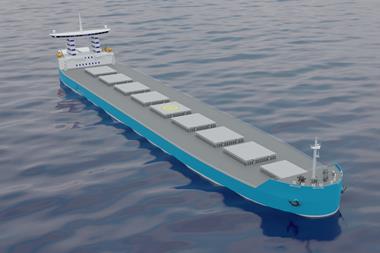
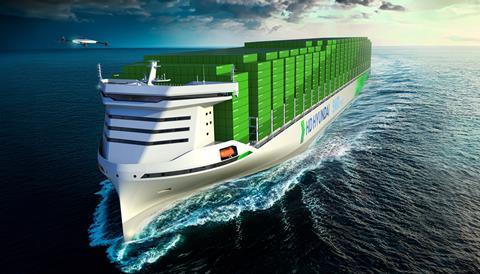
HD KSOE is currently developing a 15,000 TEU-class container vessel powered by an MSR system. Development is said to be about 50% complete, with the goal of full-scale completion by 2030. The design incorporates advanced safety systems to enhance reliability. HD Hyundai has received approval in principle (AiP) from both ABS and DNV for the SMR-powered container ship concept.
Geir Dugstad, technical director, DNV, said: “Shifting environmental requirements and advances in technology are reigniting interest in nuclear propulsion as a potential solution for maritime decarbonisation. But with little recent experience in utilising nuclear power for cargo vessels, this AiP represents an important first step in building the technical verification process for nuclear-powered vessels.”