


CORE POWER’s Liberty Programme
CORE POWER, under the leadership of CEO Mikal Bøe, is driving a radical shift in maritime energy through its Liberty programme, which centres on floating nuclear reactors (FNPPs) aimed at both decarbonising shipping and laying the groundwork for nuclear-powered vessels.
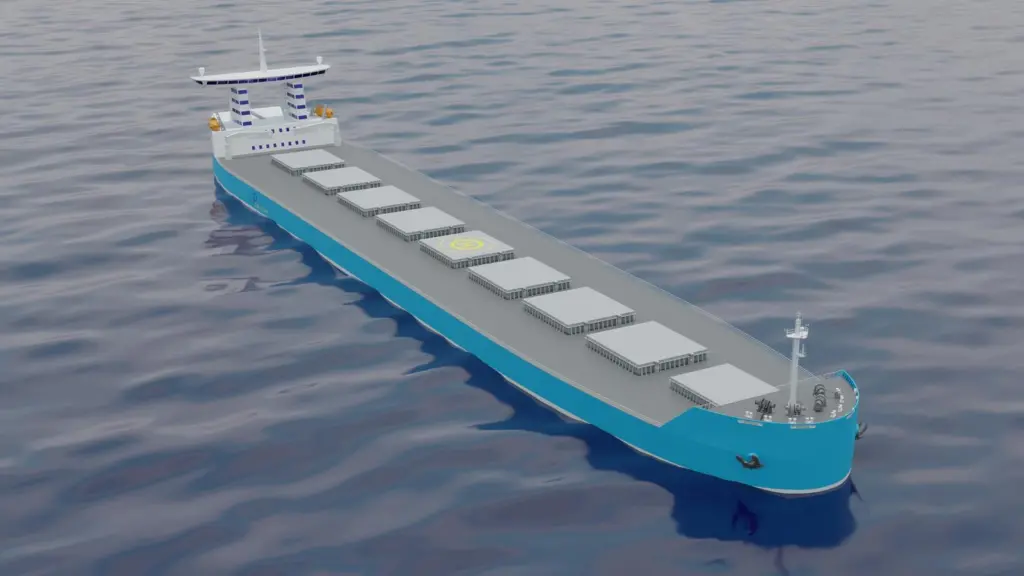
Bøe argues that as we edge towards 2040, thousands of ships – many nearing the ends of their roughly 25-year lifespans – will need replacing. By then, according to international ambitions, shipping should already be about 70 per cent of the way to net-zero emissions. The challenge is clear: newbuilds must meet increasingly strict greenhouse-gas regulations, rendering carbon-based fuels progressively obsolete.
CORE POWER believes that common alternatives such as ammonia or methanol are inherently inefficient and expensive at scale. By contrast, its floating nuclear solution offers extremely high energy density and long-term sustainability. At the heart of the concept is a molten-chloride fast reactor (MCFR), using a liquid fuel of uranium dissolved in chloride salts. This design not only removes the risk of meltdown but also simplifies operation compared with traditional solid-fuel reactors.
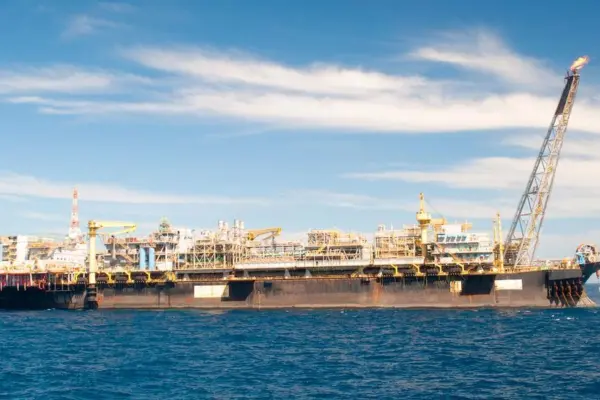
The FNPPs themselves are conceived as modular units, built in shipyards and then towed to where they are needed. According to CORE POWER, the plants – measuring around 160 metres in length – could produce 170–250 GWh of electricity a year. This level of output would dwarf many conventional fuel systems in both efficiency and endurance.
From power barges to nuclear-propelled ships
Liberty is structured in two clear stages. The first phase involves mass-producing floating nuclear power plants. These would be manufactured in modular shipyard lines, relying on existing shipbuilding skills and processes. Once completed, the FNPPs can be towed to ports (or anchored further offshore) with minimal site preparation, while centralised yards handle commissioning, maintenance, refuelling and waste management. Bøe has stated that CORE POWER intends to open its order book for these units in 2028, with full commercialisation targeted for the mid-2030s.
Once this infrastructure is in place, the second phase would kick in — developing civil ships powered directly by advanced nuclear reactors. CORE POWER says the expertise, regulatory framework and operational base established through FNPP deployment will underpin this next step.
From an economic perspective, Bøe highlights a fundamental inversion of traditional ship-fuel economics. While fossil-fuelled vessels typically carry low upfront capital expenditure but endure high operational costs, a nuclear-powered ship would incur higher initial investment but require no refuelling over a design life of 25 years.
The energy-density argument is compelling: Bøe notes that ammonia or methanol offer just 17–19 MJ per kilo, compared with bunker fuel’s 42–44 MJ/kg. In practice, that implies far larger fuel tanks (and thus less cargo space) if ships were to rely on these lower-density alternatives.
Navigating challenges
CORE POWER is well aware of the obstacles. Public perception, regulatory hurdles and insurance remain significant. The Liberty programme explicitly aims to address these by working alongside bodies such as the International Maritime Organization and the International Atomic Energy Agency. Bøe has also taken a prominent role in advocacy: as chair of the Maritime Applications and Nuclear Propulsion working group within the World Nuclear Transport Institute, he has spoken about creating a civil liability framework for nuclear-powered ships.
On the safety front, CORE POWER emphasises that its molten-salt reactor technology is passively safe, operating at near-atmospheric pressure, and negating the need for a large exclusion zone. The long fuel cycle further reduces risk, since the reactors do not require frequent refuelling.
Financially, the upside could be enormous. CORE POWER estimates the floating power market addressable by Liberty at around $2.6 trillion. The company also aims to secure an order book of $10 billion by 2030, starting with FNPPs and moving on to nuclear-propelled vessels.
Geographically, CORE POWER is casting a wide net: it has signed an agreement with Mitsubishi Research Institute to explore Japan’s maritime nuclear market, noting that Japanese shipyards could play a key role in future nuclear-propelled designs.
In short, CORE POWER’s Liberty programme proposes a bold, modular pathway to bring nuclear power into mainstream shipping – first as floating power plants, then as onboard propulsion. The strategy combines technical innovation with regulatory engagement, and its success could redefine how maritime trade is powered.
Related Articles
 ALTERNATIVE FUELS & LUBRICANTS
 ALTERNATIVE FUELS & LUBRICANTS
 WIND PROPULSION