

Wärtsilä has signed a Decarbonization Agreement with Raízen, an integrated energy company with a broad portfolio of renewables, to explore the potential use of ethanol as a marine fuel and to advance the development of the first ethanol-fuelled seagoing vessel.
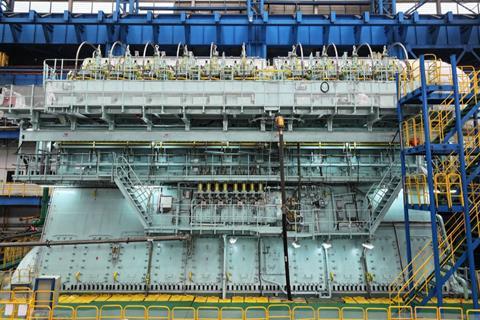
Under the terms of the agreement, Wärtsilä will conduct technology tests with ethanol as a primary fuel at Wärtsilä Sustainable Fuels engine laboratories.

The power system technologies provider will also support Raízen in discussions with ship designers and shipowners, and provide guidance on regulations and compliance requirements for the use of cellulosic ethanol as fuel.
Raízen notes that Wärtsilä, under its fleet decarbonization program, has achieved a series of significant milestones to bring new sustainable solutions to the market. Raizen has conducted an initial review that has identified that replacing fossil fuels with sustainably produced ethanol in marine transportation can reduce CO2 emissions by up to 80% in a standard route from Brazil to Europe.
“At Wärtsilä, we are investing heavily in the development of technologies, engines and solutions aimed for low and zero carbon marine fuels. This agreement with Raízen, a company committed to supporting the sector’s decarbonization, is yet another example of how we seek ways to enable the journey towards a decarbonised future,” commented Stefan Nysjö, Vice President, Power Supply, Wärtsilä Marine Power.
Raízen notes that the companies are proactively seeking strategic alliances with shipping partners who share the vision of vessel decarbonisation.
The Motorship notes that ethanol is a relatively small volume fuel in some parts of the world, it occupies a significant role in the transportation fuel mix in South America, and in Brazil in particular. It is also increasingly relevant in North America as a fuel. The long-term trend towards electrification in the passenger vehicle and light commercial vehicle segments is increasing ethanol producers’ interest in developing new markets.