
EXCLUSIVE: Silicone coatings target ageing fleets
AkzoNobel Marine Coatings is targeting the growing cost and efficiency challenges facing an ageing commercial fleet with the launch of Intersleek 2120, its latest silicone foul-release coating technology.

The new system is designed to broaden the use of silicone foul-release technology across mainstream tankers and bulk carriers, where shipowners are increasingly focused on fuel efficiency, off-hire costs and extending the working life of older vessels.
Silicone foul-release coatings have been used for three decades, but adoption has traditionally been concentrated among more specialised vessels. Chris Birkett, AkzoNobel’s Global Marine Segment Manager, said the obstacles have largely been commercial and operational rather than technological.
“Premium systems could carry higher upfront cost, more coats in the scheme, greater application complexity and longer time in dock,” Birkett told The Motorship. “With Intersleek 2120 we’ve focused on removing those access barriers.”
Fewer coats
The coating requires fewer coats than established silicone systems, according to AkzoNobel, with the aim of reducing application time and drydock costs while providing performance suited to commercial fleet operating conditions.
The timing comes as shipowners contend with an ageing fleet and increasing pressure to improve vessel efficiency. Tankers have an average age of more than 14 years, with around 53% aged over 15, while the average age of bulk carriers has risen from about 8.6 years in 2018 to almost 13 years in 2025.
For operators of older vessels, investment decisions increasingly involve balancing asset life against capital expenditure. Hull performance is becoming a more important part of that calculation as emissions regulations add costs to inefficient operations.
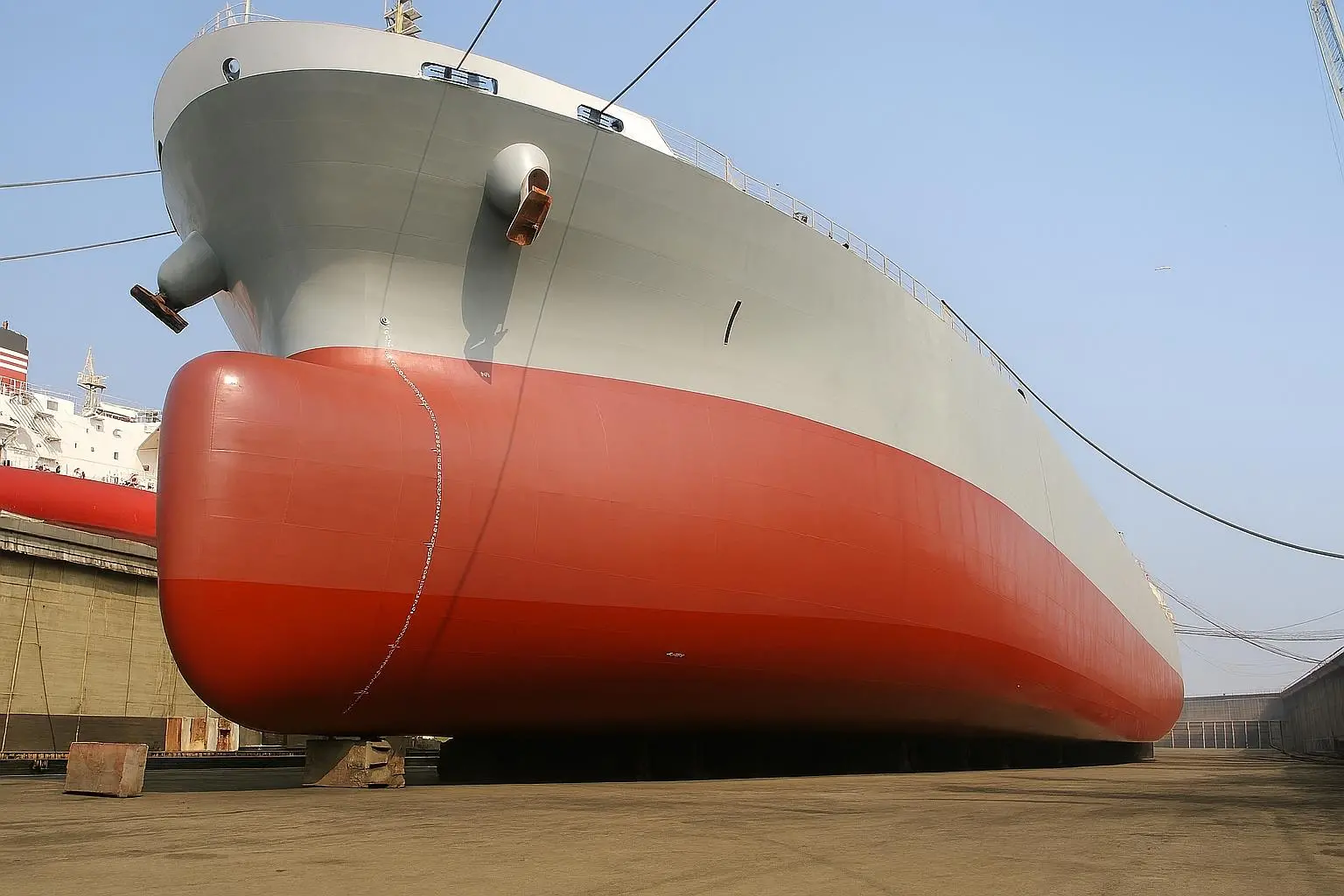
“As the hull represents the largest wetted surface area of a ship, increased drag from fouling can have a direct impact on fuel efficiency and carbon intensity,” Birkett said.
Advanced antifouling
He added that advanced antifouling and foul-release coatings provide operators with an opportunity to improve vessel efficiency during routine drydocking. Intersleek 2120 has a reported speed-loss performance of up to 1.4%.
Drydock efficiency is another consideration. Birkett estimates that off-hire costs can reach approximately US$10,000-US$25,000 per day for a bulker and US$20,000-US$50,000 for a tanker, while routine drydocking can cost US$3 million-US$4 million for bulkers and US$5 million-US$6 million for tankers.
“Particularly in a volatile freight environment, when rates are high, every off-hire day is a missed earning opportunity you can’t get back; when they soften, cost control is what protects margin,” he said.
Although antifouling typically represents only about 20% of docking costs, Birkett said application complexity can contribute to additional yard time. He argued that shipowners should therefore assess coatings on their total cost of ownership rather than upfront paint expenditure alone.
The company also sees potential advantages from the coating’s biocide-free silicone surface as hull cleaning becomes a more prominent part of vessel management.
Fuel efficiency
Looking ahead, Birkett expects regulation and the rising value of fuel efficiency to support greater interest in foul-release technology. “As alternative fuels remain scarce and costly, the value of efficiency gains is likely to grow,” he said.
However, he cautioned against treating silicone as a universal solution. “This isn’t a case of ‘silicone for everyone’,” Birkett said. “No two ships are the same, and the right answer remains the coating that best aligns with a vessel’s operating profile and commercial realities.”
For owners managing older tankers and bulkers, the launch positions hull coatings as part of a wider strategy to control operating costs, reduce disruption and extract greater efficiency from existing assets.
Related Articles
 ELECTRIFICATION AND BATTERY HYBRIDS
 TURBOCHARGER
 INDUSTRY NEWS