



Carisbrooke Shipping, the UK shipowner, is participating in a demonstration project to develop an innovative zero-emission hydrogen-fuelled auxiliary engine. The project has been awarded £2.3 million as part of the UK government’s Clean Maritime Demonstration Competition (CMDC3).
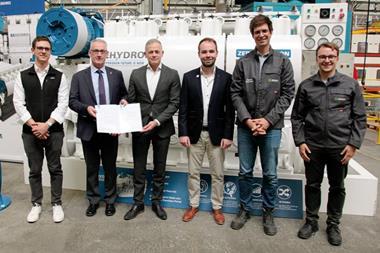
The project includes a UK engine design start-up, Carnot, as well as Brunel University and the Manufacturing Technology Centre. The project partners will work closely with Bureau Veritas, the UK’s Maritime and Coastguard Agency, and other interested parties throughout the process to deliver the project safely and within the regulatory framework.
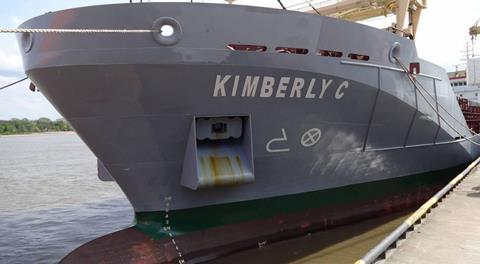
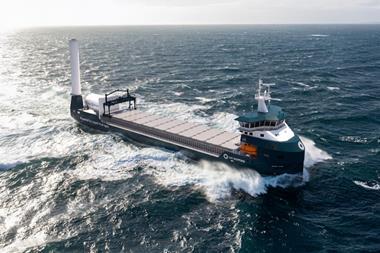
Carisbrooke Shipping expects the project to result in the installation of a containerised 50kW engine on the deck of the Kimberly C, a 6,805 dwt general cargo vessel for a 40-day sea trial in early 2025, when it is expected to partially supply electrical power to the vessel.
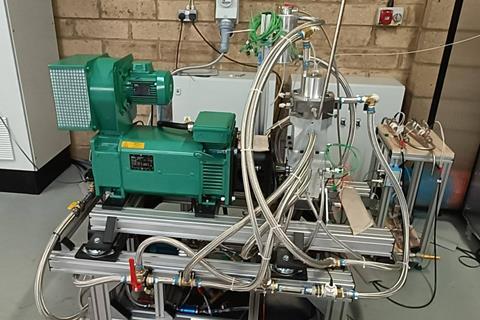
Carnot notes that its engine design replaces up to one-third of the engine’s components with advanced technical ceramic components. By eliminating the requirement for engine cooling systems, the start-up claims its design can achieve higher engine thermal efficiencies of up to 70%, compared with traditional engines. The engine holds out the possibility of lowering fuel consumption by 45%, compared with conventional engines.
The funding comes from the third round of the UK government’s Clean Maritime Demonstration Competition (CMDC3), which focuses on developing a range of clean maritime technologies including hydrogen, ammonia, electric and wind power.